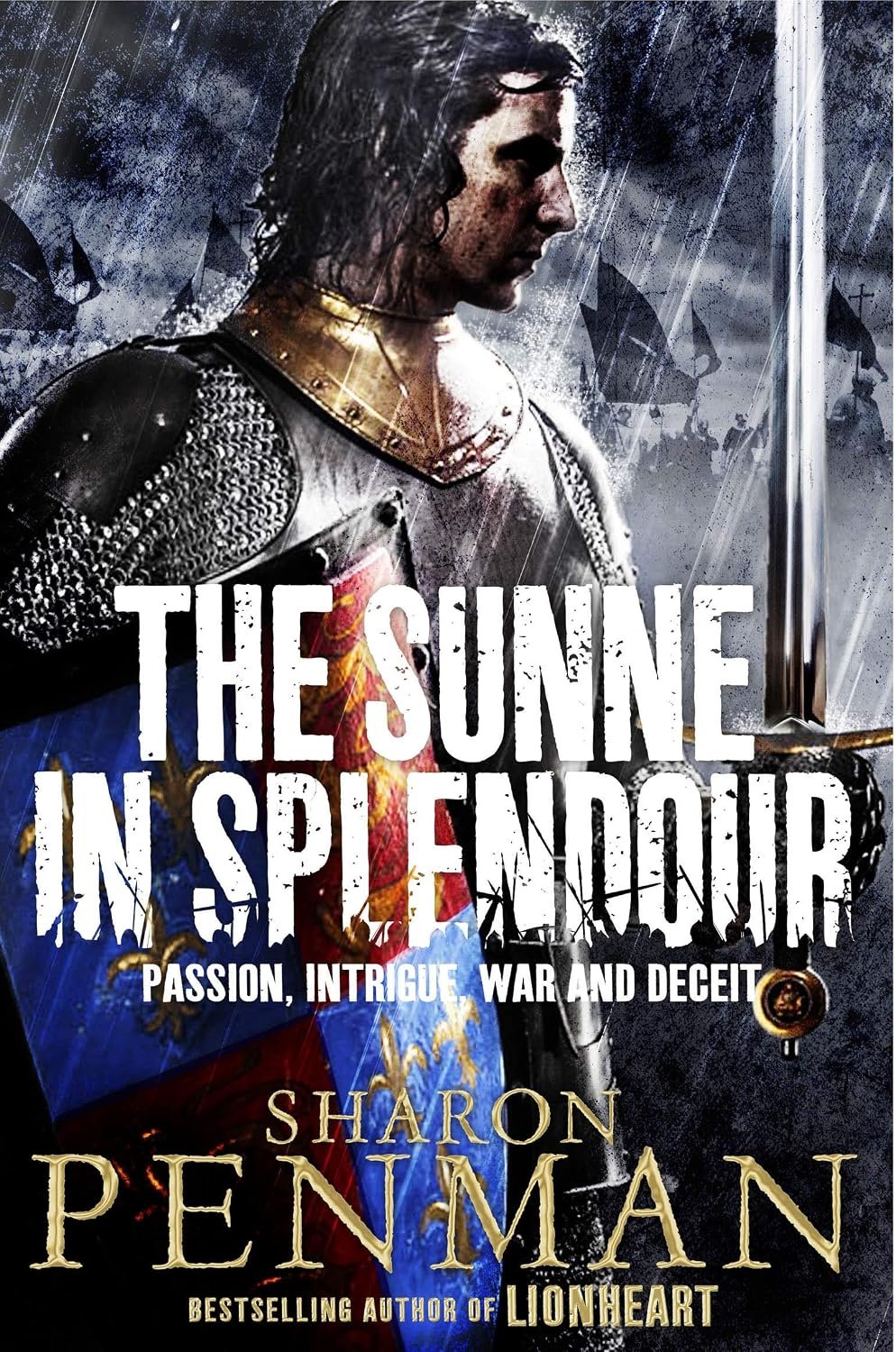
Sharon Kay Penman’s historical fiction novel is thought of as one of the best novels set around the Wars of the Roses and challenges the image of Richard III as villainous and corrupt, so deeply popularised by Shakespeare in his play of the 1590s.
Although published back in 1982, the first I knew of this novel was on holiday in Middleham around three years ago, when a weighty tome caught my eye in the English Heritage gift shop at Middleham Castle. As per my usual habit of collecting books, it then sat on my shelf gathering dust until this summer, when I finally dared to open the daunting novel, with its tiny print, and began a surprisingly pleasant journey with Richard III.
My Review of The Sunne in Splendour
Penman guides us through the eyes of Richard, from boy to man and ultimately King. Rather than the greed, cunning and dishonesty so often used to define the man who may, or may not, have murdered his own nephews in the Tower of London, we are presented with a compassionate, kind and sympathetic character, shaped by the circumstances around him rather than any overwhelming lust for power. I have to confess to having always been a Richard III supporter, but Penman’s portrayal added even greater depth to a historical figure who is so often illustrated only by the victors of history. Throughout the novel, he is referred to as Dickon, creating a far more intimate and personal connection to a man who displays periods of innocence, anxiety and fear.
Despite the intimidating length of this novel, at around 236,000 words spread across almost 900 pages, it is surprisingly readable and becomes incredibly easy to get lost in the story. The extent of Penman’s research is impressive, with detailed and historically rich battle scenes balanced by more tender, family-oriented moments between Richard and his brothers, as well as Richard and his beloved wife, Anne Neville. The result is a novel that feels just as much a narrative about loyalty, love and family as it does about politics and war. We are also given intimate glimpses of other well-known historical figures who influenced Richard’s life, such as his mother, who is described as “an early riser. She loved the expectant hush, loved the soft pale haze that glimmered in the eastern sky in that brief hesitation between dark and day.” Glimpses like these dotted throughout the narrative showcase Penman’s ability to bring historical figures to life as people rather than simply names in a history book or blank-faced portraits adorning the walls of a former medieval palace.
Likewise, we are introduced in much greater depth to Richard’s wife Anne Neville, who loved him from childhood and ultimately experiences more grief, anxiety and loneliness as a result of the politics and circumstances surrounding their marriage than can ever be conveyed through surviving historical documents.
I am particularly fascinated by such a sympathetic and delicate depiction of Richard, especially as it predates the wave of public interest and sympathy prompted by the discovery of his skeleton beneath a Leicester car park in 2012. Reading the novel in 2026, it feels very much ahead of its time in encouraging readers to look beyond the caricature and consider the man behind the legend.
Whilst my view of who Richard III was has not been greatly altered by Penman’s colourful and multi-faceted portrayal of him, her words have certainly made him feel more three-dimensional: a human being who lived, loved, laughed, cried and breathed. For me, Penman has considerably reduced the distance between contemporary and medieval life, reminding readers that people have always shared the same hopes, fears and ambitions.