
By the summer of 1098, the First Crusade stood on the brink of collapse. Starving, surrounded, and outnumbered, the Crusaders at Antioch faced what seemed like certain destruction.
And yet—against all odds—they emerged victorious.
What changed?
According to contemporary accounts, the turning point came not from strategy or reinforcements, but from the discovery of a sacred relic: the Holy Lance of Antioch. Said to be the very spear that pierced Christ’s side, it transformed despair into belief—and belief into victory.
But was it truly a miracle? Or something more complicated?
The Siege of Antioch (1097–1098): Hunger, Death, and Desperation
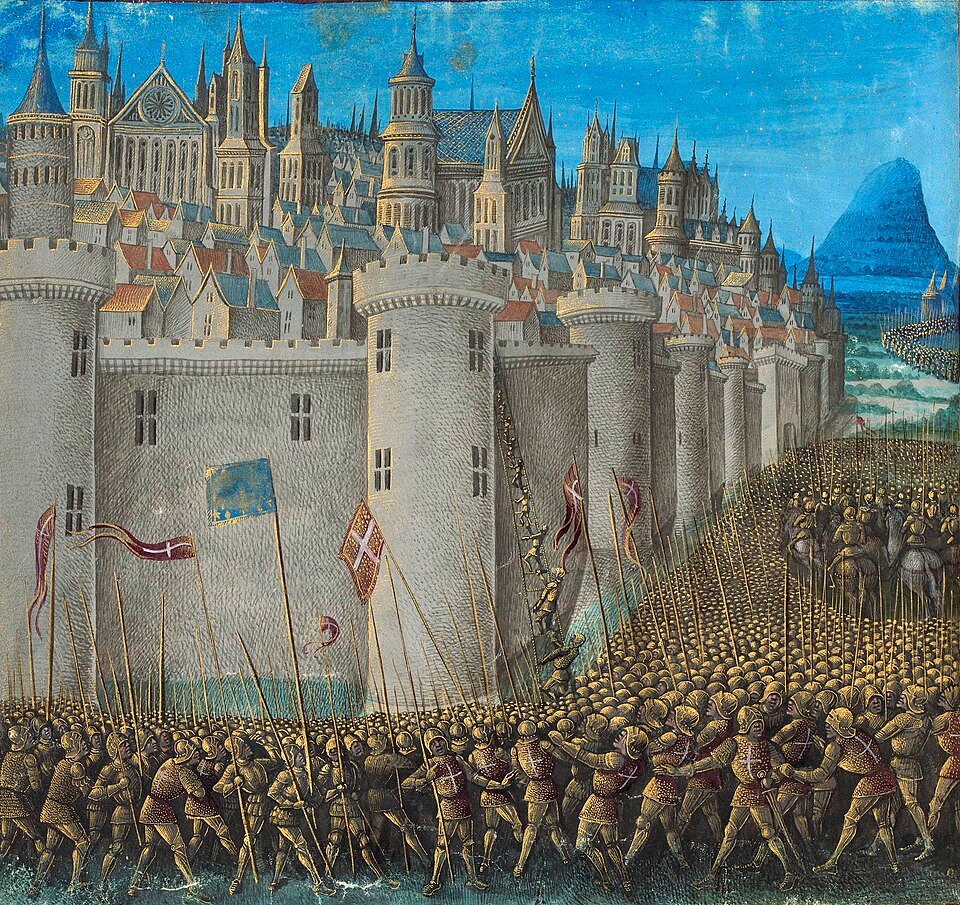
After departing Europe in 1096, the Crusaders marched across Byzantine territory and into hostile lands, eventually reaching Antioch on 20 October 1097. What they found was a formidable, heavily fortified city.
The siege dragged on for nine brutal months. Conditions deteriorated rapidly. Food shortages became catastrophic—chroniclers suggest that as many as one in five Crusaders died from starvation.
Desperation forced the army into extreme measures. They consumed horses, dogs, and even scavenged seeds from manure. Survival, not victory, became the immediate concern.
Finally, in June 1098, a breakthrough came—not through force, but betrayal. Bohemond of Taranto persuaded an inhabitant of Antioch to grant the Crusaders access to the city. Under cover of darkness, a small group scaled the walls, opened a gate, and allowed the army inside.
What followed was a massacre.
“All the squares of the city were everywhere full of the corpses of the dead… no one could go along a street except over the bodies.”
The Crusaders had taken Antioch—but their ordeal was far from over.
From Victors to Victims: The Arrival of Kerbogha
No sooner had the Crusaders seized the city than they found themselves trapped within it. The citadel remained in enemy hands, and worse still, a massive relief army led by Kerbogha arrived.
The Crusaders were now the besieged.
Kerbogha encircled Antioch, cutting off supplies and waiting for starvation to do its work. Once again, hunger consumed the Crusader army:
“…the crowds… were forced to devour their leather shoes… filling their bellies with roots and woodland plants.”
The situation was hopeless. A direct battle would mean annihilation.
The Crusaders needed a miracle.
The Vision of Peter Bartholomew
That miracle came in an unlikely form: a poor and disreputable monk named Peter Bartholomew.
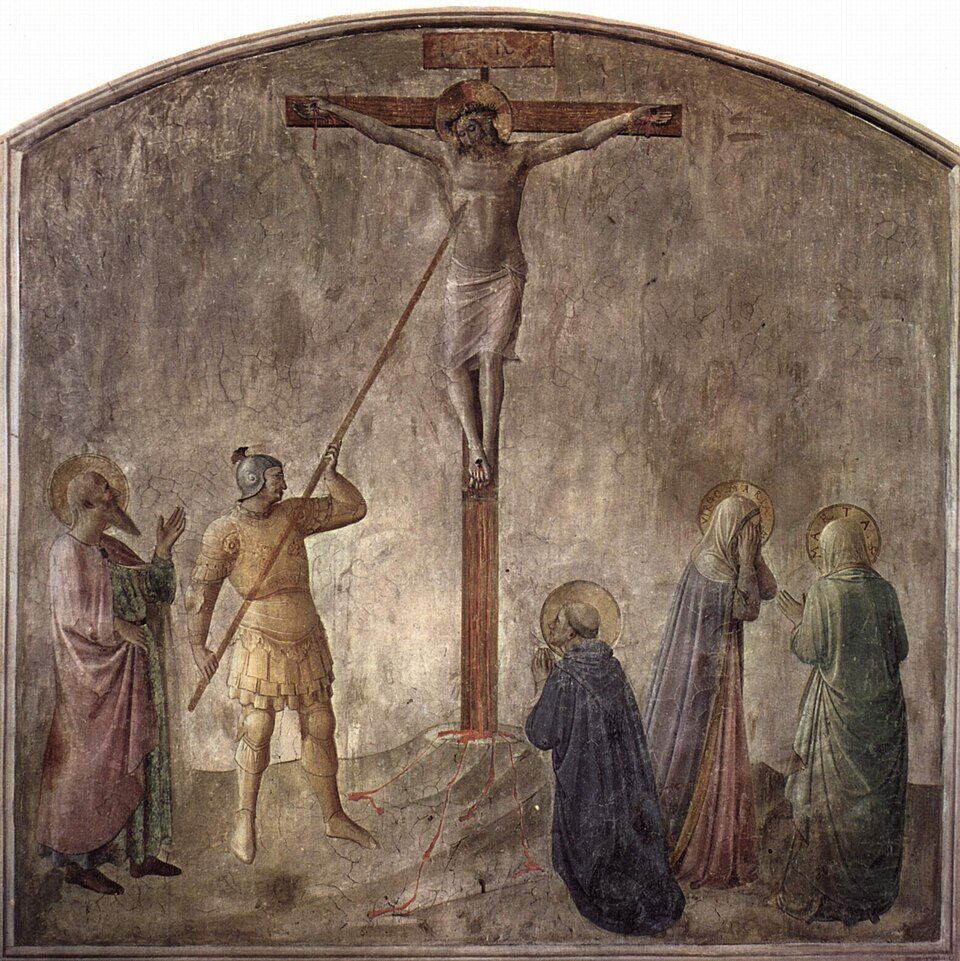
Peter claimed that he had experienced a series of visions, in which Saint Andrew and even Christ Himself appeared to him. They revealed the location of a sacred relic buried within Antioch—the Holy Lance, believed to be the spear used by the Roman soldier Longinus to pierce Christ during the Crucifixion.
According to Peter, the relic lay hidden beneath the Church of St Peter. He was instructed to inform Raymond IV of Toulouse and the papal legate Adhemar of Le Puy.
The promise was extraordinary:
Whoever carried the Lance into battle would never be defeated.
At first, Peter hesitated. He was of low status, and his claims were bold. But eventually, compelled by his visions, he delivered the message.
The Discovery of the Holy Lance (15 June 1098)
With morale collapsing and options exhausted, Raymond of Toulouse ordered a search.
A group of men began digging inside the church. Hours passed. Nothing.
Then, on 15 June 1098, Peter himself leapt into the pit and began digging frantically. At last, he produced a spearhead—the Holy Lance.
An eyewitness recorded the moment:
“And I… kissed it when the point alone had as yet appeared above ground.”
For many, this was divine intervention.
But not everyone was convinced.
Belief and Doubt Among the Crusaders
While Raymond of Toulouse embraced the discovery, others remained sceptical.
Adhemar of Le Puy had doubts, possibly because a reputed Holy Lance already existed in Constantinople—a relic associated with Helena.
Scepticism also stemmed from Peter himself. He was no saintly figure, and his sudden rise to prominence raised eyebrows.
Yet despite these doubts, the effect of the discovery was undeniable. Morale surged.
As one letter to Pope Urban II reported:
“We were so comforted and strengthened… that those who had been fearful became courageous.”
Whether genuine or not, the Lance had given the Crusaders something they desperately needed: hope.
The Battle of Antioch (28 June 1098)
Just weeks later, the Crusaders marched out to face Kerbogha’s army.
They were still outnumbered—but now they believed they were divinely protected.
The Lance was carried into battle, reportedly by Adhemar. As the armies clashed, some Crusaders claimed to witness a heavenly host descending onto the battlefield:
“Countless armies with white horses… led by St George, Mercurius and Demetrius.”
This vision reinforced the belief that God was fighting alongside them.
Against all expectations, the Crusaders won. Kerbogha’s army collapsed, and the survivors fled.
The siege was broken. Antioch was theirs.
After the Miracle: Death, Visions, and Division
Shortly after the victory, Adhemar of Le Puy died on 1 August 1098. His death removed a moderating voice among the Crusaders—and the controversy surrounding the Lance deepened.
Peter Bartholomew continued to report visions, even claiming that Adhemar had appeared to him after death, confessing that his earlier doubts had condemned him.
These increasingly dramatic claims began to erode Peter’s credibility. Critics, led by Arnulf of Chocques, challenged him openly.
Trial by Fire (1099)
To prove the truth of his visions, Peter agreed to undergo trial by ordeal.
On 8 April 1099, he walked between two blazing walls of fire while carrying the Lance. According to supporters, he emerged alive—proof of divine favour.
But the reality was more ambiguous.
In the chaos that followed, the crowd surged forward to touch him. He was trampled, badly injured, and died days later.
To believers, his death did not disprove the miracle. To sceptics, it confirmed it had all been a fraud.
A Relic That Divided an Army
The Holy Lance did more than inspire—it divided.
Raymond of Toulouse remained its fiercest defender, even declaring Peter a saint. Others rejected the relic entirely. Tensions escalated to the point of violence between factions within the Crusader leadership.
These divisions would resurface later, particularly during disputes over leadership and control of conquered territories.
Miracle or Myth?
The story of the Holy Lance of Antioch sits at the intersection of faith, desperation, and politics.
For the Crusaders, it was a turning point—a moment when divine favour seemed to intervene directly in human affairs. Without it, the Crusade may well have ended in failure at Antioch.
Yet the doubts surrounding the relic reveal something equally important: not all Crusaders were blindly driven by faith. Many questioned, debated, and resisted claims of miracles.
In the end, whether the Lance was genuine mattered less than what it achieved. It gave a starving, trapped army the belief it needed to fight—and win.
And in doing so, it secured its place as one of the most extraordinary episodes of the First Crusade.

1 comment
[…] The First Crusade did not emerge in a vacuum. When Pope Urban II called for a military expedition to the East in 1095, he was responding to decades, indeed centuries, of political, religious, and military developments. […]