For much of the early Medieval period, Scotland was a place on the fringe of literate cultures. It brushed up against the Anglo-Saxons and Britons in the south, and the Gaelic communities in the South. The people of the northeastern regions of Scotland were seen as a people apart, dubbed by the Romans to be the Picti, or the Painted Peoples. They were often portrayed as wild barbarians, dangerous reavers who preyed on more settled people. The Picts, like so many people throughout history, had no written tradition with which to speak for themselves from the past. But who were the Picts? Were they just a name brought down by the Romans? Or were there truly a people apart, who lived in Northeastern Scotland through the early Middle Ages?
The Romans and the People North of the Wall
The Romans invaded the island of Britain in 43 A.D., during the reign of Emperor Claudius. Britannia had long been viewed as a land apart, a place steeped in mystery to the Mediterranean world. And to the incoming Romans, all the people living on that island, no matter their name or tribe, were Britons. The Romans were never careful ethnographers, even by the standards of the ancient world, but their initial impressions were that all of the people of the island were roughly the same, whatever their indigenous identity was.
This perception shifted over the course of the first and early second centuries A.D. As the conquests ground to a halt around modern Hexham, the Romans differentiated between the people on their side of the perceived border, and those across it. Even at the time, this did not reflect reality. Much like more recent European colonists, the Romans sliced through perceived native borders, meaning that kingdoms such as the Brigantines or the Votadini found themselves split between these borders. Over the course of the first century, the Romans constructed Hadrian’s Wall, a massive fortification that spanned the width of northern Britain, much of which is still visible today. This wall was as much a symbolic and cultural barrier as a military one, and would be manned in some capacity for the next two and a half centuries.
The people south of the wall became increasingly romanized, adopting Roman civic ideas as well as many adopting the Latin language. Over the course of the centuries the physical wall became a cultural one. But people still passed back and forth regularly. In his book on the Picts, Tim Clarkson notes the appearance of people buried in Roman provinces who were born north of the wall. These people did not identify themselves as Picts. In fact, the first reference to Picts as a people does not appear until 297 A.D. A poet, Eumenius, referenced them in a panegyric. It had long been assumed that this was a reference to their habit of dying their skin blue, though some modern scholars argue that it was a name for themselves, “Pecht” or “the ancestors”
Picts in the Late Classical and Early Medieval World
Even if people did not live within the Roman Empire, it was impossible not to be influenced by it. Trade went back and forth across the wall, as did people. And the societies bordering the Empire used this wealth in order to build up their own authority, through trade and raiding. In the year 397 A.D., there was “a great barbarian conspiracy” that included the Picts, as well as other barbarian groups, invading lower Britain. According to Ammianus and other historians, people he referred to as the “Northern Britons” joined the Picts in their attacks, perhaps implying that these labels were more porous than previously thought.
However, by the early medieval period, both Anglo-Saxons and Britons of the lowlands viewed the Picts as a people apart. For the Britons, one of the clearest delineations is a religious one. Until the arrival of Irish missionaries, the Picts would remain pagan, worshipping in their traditional ways. Even the Saxons, who had a tendency to lump the various Britons together, spoke about the Picts as something different.
Culture of the Picts
The Picts did not leave behind an extensive written culture, so modern historians are forced to rely on names and the limited inscriptions that exist. For generations, historians had argued that the Picts were culturally completely diverged from the rest of Britain. They were treated as though they were the original people of Britain, predating even the Celtic speaking Britons. However, the current consensus is that the Picts spoke a language closely related to Brythonic. While it might have some loanwords from non Celtic speaking languages, historians like Tim Clarkson generally believe that the Picts were similar to what many of the Pre-Roman Britons would have been like, with a somewhat divergent language.
Over the course of the sixth and seventh century, the Picts begin to interact more and more with the other people of Britain. King Aethelfrith of Northumbria defeated them in battle in the late sixth century, and they and the Gaelic-speaking people of western Scotland often contended against each other. They even defeated another English King at Dun Nechtain in 685, killing the king of Northumbria. According to tradition, The Pictish kings had their royal seat around Fortriu, in the north east of Scotland, and would hold onto this territory for the next three centuries.
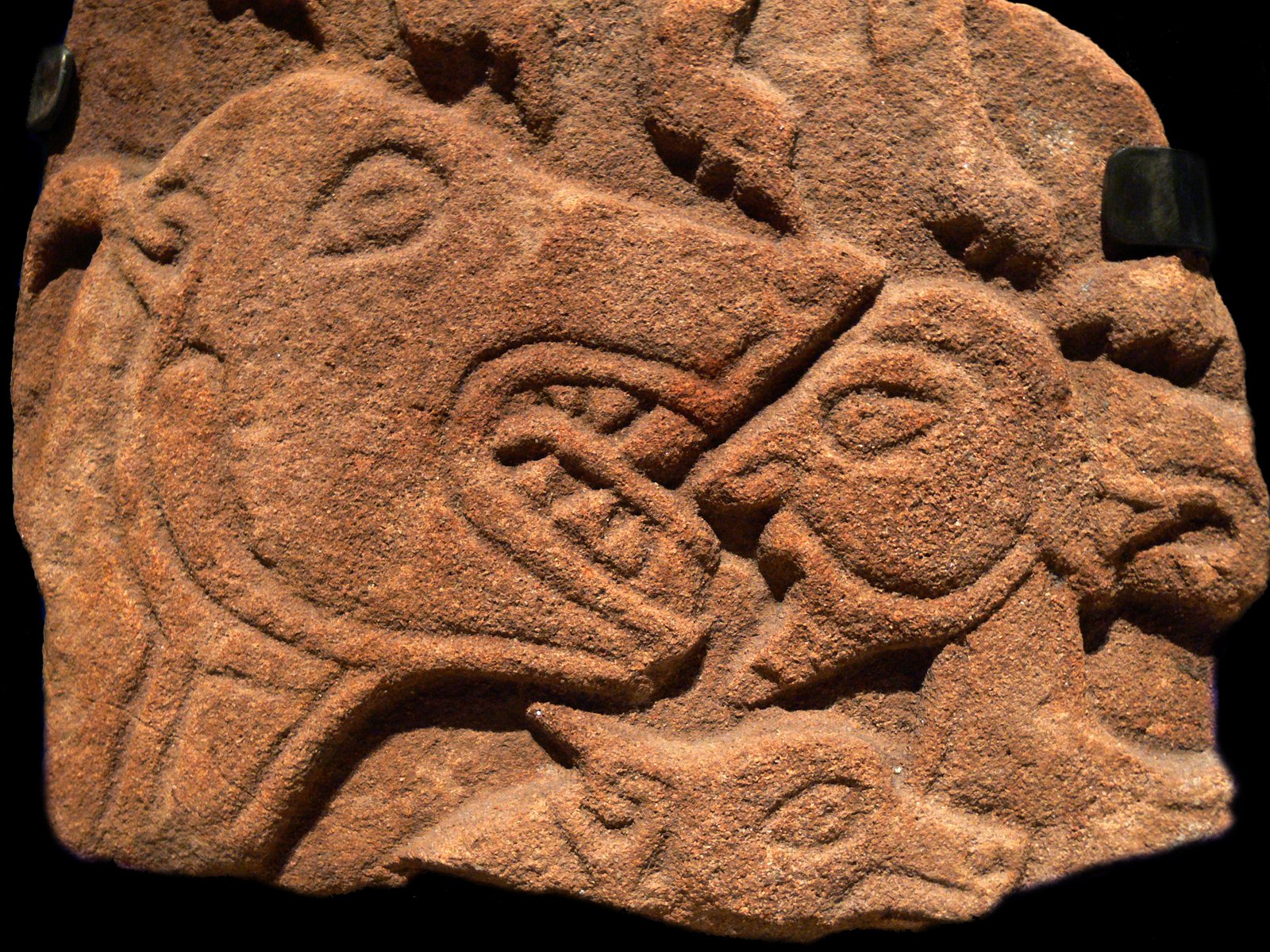
The Picts had little in the way of a written culture, but they often propped up standing stones. Many of the stones were intricately carved with animals, both real and mythological. These stones are now on display both in the British History Museum, and the Archaeological Museum of Scotland. Many archaeologists have wondered at the meaning behind these stones, and while this will never be understood completely, several theories suggest that most of the creatures, such as bulls and boars, are animals associated with strength.
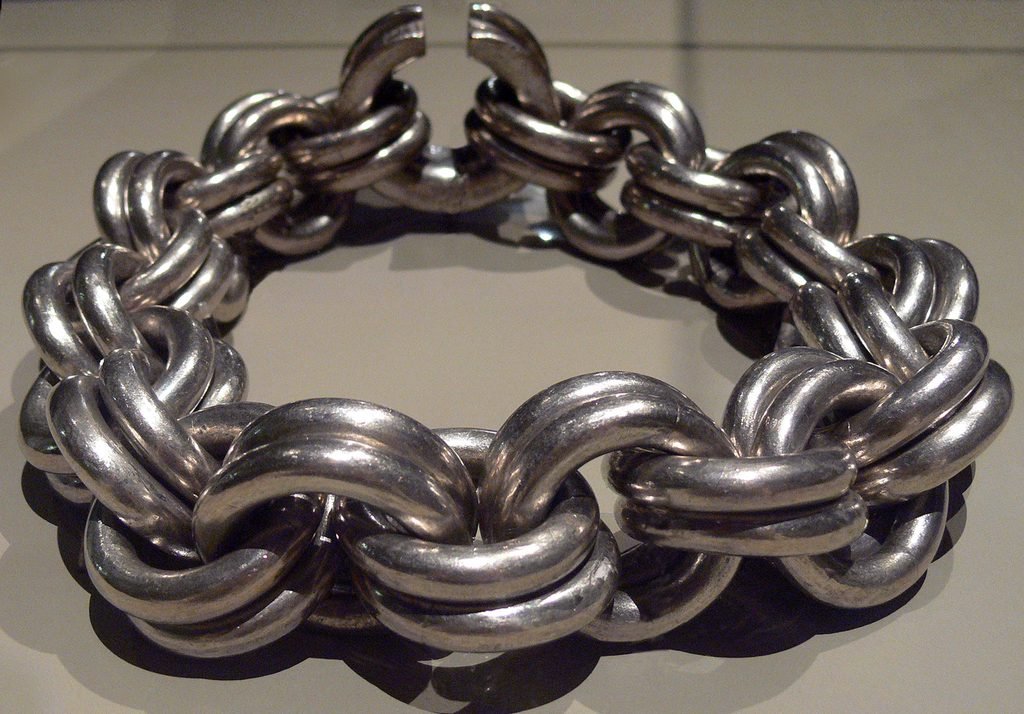
F Lamiot, Public domain, via Wikimedia Commons
The Rule of the Picts, and their Decline
According to tradition, the Picts had their royal seat around Fortriu. The name comes from the Gaelic people of the West, who were doing much of the writing in Scotland during this period. Scotland was not united at this point and was rather a patchwork of local lords, loosely organized around the Pictish chiefs in the north, and the Gaelic ones in the west. The English and Britons also held power throughout the south. These three different groups would ally or fight each other based on the moment, with the names of kings and leaders showing the mixing between them. Names like Nechtan, Talorc, and Uniust noted both Gaelic and Brythonic influence on the Picts. According to Gaelic sources, the Picts were matrilineal, meaning that authority went through the female line. This has not been confirmed however.
Over the course of the eighth and ninth centuries, the Pictish kingdom became increasingly intertwined with the Gaelic one in the west, making the two political entities more difficult to separate. Pictish kings seem to have become increasingly Gaelic, with the Pictish language falling into decline. The final stroke was the Viking invasions. The Viking raiders of the ninth and tenth centuries threw all of northern Britain into disarray, but impacted the Pictish regions most heavily. Northeastern Scotland saw the most heavy settlement from Scandinavia, as well as significant slave raiding and human trafficking. Even today, many parts of Northeastern Scotland, particularly in the Shetland region, keep their Scandinavian flavor.
When the Scottish kingdom finally began to reassert itself, it did so in a mostly Gaelic context. While the English and Scandinavian elements would be there, with the English becoming increasingly important over the course of the medieval period, the Pictish stamp was largely gone. And between their lack of writing, and the extinction of their language, the Pictish kingdoms became a memory, just lone stones carved with the memories of a culture that no longer remained.
Bibliography
Clarkson, T. J. The Picts: A history. Birlinn, 2013.
Woolf, Alex. From Pictland to Alba: 789-1070. Edinburgh University Press, 2007.
Featured Image: Detail of a stone carved Pictish monument. F Lamiot , Public domain, via Wikimedia Commons