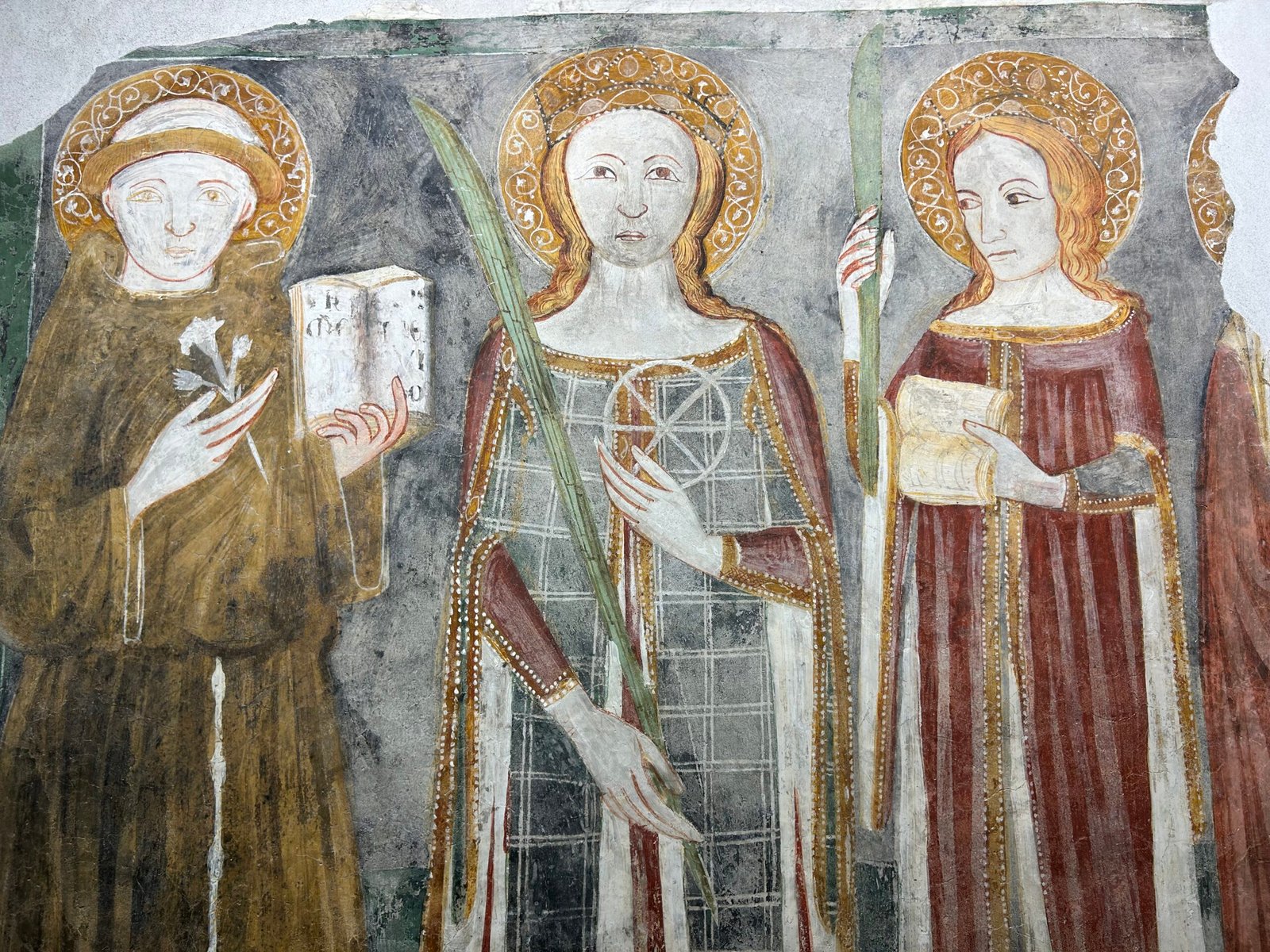
Wisdom, revenge and political power: three women whose stories reveal a different side of Longobard history through the writings of Paul the Deacon.
When we think of the Longobards, we tend to imagine warriors, migrations, battles and conquests. Their arrival in Italy in 568, under the leadership of King Alboin, marked a turning point in the history of the peninsula. Yet behind the military campaigns and struggles for power lies another story, one in which women appear as far more than wives, mothers or figures in dynastic marriages.
One of the most fascinating sources for exploring their roles is the Historia Langobardorum, written towards the end of the eighth century by Paul the Deacon, a Longobard monk and historian who had witnessed the fall of his people’s independent kingdom.
His work, divided into six books, traces Longobard history from its legendary beginnings in northern Europe to the eighth century. Although largely concerned with kings, wars and political events, Paul repeatedly introduces women whose decisions influence the course of events.
Among them, three figures deserve particular attention: Gambara, the mythical matriarch of the earliest Longobards; Rosamund, whose name became associated with one of the most notorious acts of revenge in early medieval history; and Theodelinda, a queen whose political and religious influence left a lasting mark on the Longobard kingdom.
Their stories differ considerably, as does the historical evidence supporting them. Nevertheless, they invite us to consider a question that is often overlooked: what place did women occupy in the history and collective memory of the Longobards?
Before Paul the Deacon: the Origo gentis Langobardorum
To understand Gambara’s story, we must begin with a source that predates Paul the Deacon’s work: the Origo gentis Langobardorum, literally The Origin of the People of the Longobards.
This short Latin prose text, traditionally dated to the seventh century, is among the earliest surviving accounts of Longobard history. Its anonymous author recounts the legendary origins of the people, their migrations, their settlement in Italy and the succession of their rulers, with the surviving narrative reaching the reign of Perctarit (671–688).
We know little about the circumstances of its composition. The text probably emerged within a Longobard political and cultural environment, but the identity of its author remains unknown. Its precise date is also debated, and the surviving version may preserve earlier traditions subsequently revised or expanded.
What makes the Origo particularly valuable is its preservation of an ethnogenetic myth, a narrative through which a people explained its origins and the formation of its collective identity.
At the centre of this tradition lies the story of the Winnili, the ancestors of the Longobards, and the divine intervention through which they supposedly acquired their name.
About a century later, Paul the Deacon drew extensively on this earlier tradition when composing the opening chapters of his Historia Langobardorum. He retained much of its narrative while interpreting it from the perspective of a Christian author.
The relationship between the two works offers an interesting glimpse into the ways the Longobards remembered their past. Traditions that had once explained their identity through pagan gods continued to circulate long after their conversion to Christianity.
And one of the most important figures in this tradition was a woman.
Gambara: the mythical mother of the Longobards
According to the Origo gentis Langobardorum, the ancestors of the Longobards originally lived in a northern land called Scadanan, usually associated with Scandinavia.
They were then known as the Winnili, and among them lived a woman named Gambara, mother of two leaders, Ibor and Aio.
The Origo introduces her with a particularly revealing passage:
Ipsi cum matre sua nomine Gambara principatum tenebant super Winniles.
“Together with their mother Gambara, they held leadership over the Winnili.”
Origo gentis Langobardorum, 1.
Gambara is often described as a mythical queen, although the original text does not explicitly call her regina. Instead, it presents her as sharing authority with her sons.
This distinction matters. Gambara is not merely the mother of two leaders. She is herself part of the leadership of the Winnili, at least within the legendary tradition preserved by the Origo.
Paul the Deacon, who recounts the story in the third chapter of his first book, emphasises her intelligence and judgement:
Horum erat ducum mater nomine Gambara, mulier quantum inter suos et ingenio acris et consiliis provida.
“The mother of these leaders was named Gambara, a woman distinguished among her people by her sharp intelligence and foresight in giving counsel.”
Historia Langobardorum, I, 3.
The Winnili, Paul tells us, left their Scandinavian homeland and eventually reached a region called Scoringa. Its precise location remains uncertain, although it has often been associated with the Baltic area.
There they encountered the Vandals, ruled by two brothers named Ambri and Assi.
The Vandals demanded tribute and threatened war if the Winnili refused. Faced with this ultimatum, Ibor and Aio consulted their mother. Gambara supported their refusal, and the Winnili chose to fight rather than surrender their freedom.
But according to the legend, their enemies possessed a considerable advantage.
The outcome would depend on the intervention of the gods and, unexpectedly, on the appearance of the Winnili women.
The women who gave a people their name
Before the battle, Ambri and Assi appealed to Godan, a Germanic deity identified with Odin, asking him to grant them victory.
Godan promised that victory would belong to the people he saw first at sunrise.
Gambara and her sons, meanwhile, sought the help of Frea, Godan’s wife, generally associated with the goddess Frigg.
Frea proposed a curious stratagem.
The Winnili women were to let their long hair fall around their faces, arranging it to resemble beards. At dawn, they would stand beside the men, facing the direction from which Godan would look.
The goddess then turned her husband’s bed towards the east and awakened him at sunrise.
When Godan opened his eyes, he saw the Winnili gathered before him, their women appearing to have long beards.
Surprised, he asked:
Qui sunt isti longibarbae?
“Who are these long-beards?”
Origo gentis Langobardorum, 1.
Frea immediately replied that, having given these people a name, he should now grant them victory.
Thus, according to the legend, the Winnili became the Langobardi, the Longobards, traditionally understood as the people of the long beards.
The episode is an extraordinary example of how a community could explain its name and identity through myth.
More interestingly, women occupy a central position in the narrative. Gambara participates in the leadership of her people and seeks divine assistance, while Frea devises the strategy that secures their victory.
Even the Winnili women themselves become essential to the story. Without their participation, Godan would never have uttered the words from which the new name supposedly originated.
The identity of the Longobards is therefore born, in the legend, from an act in which women play the decisive role.
Gambara’s connection with Frea has also encouraged interpretations of her as a possible religious or prophetic figure. Such readings are interesting, particularly in light of the importance sometimes attributed to women in ancient Germanic religious traditions. However, neither the Origo nor the Historia Langobardorum explicitly identifies Gambara as a priestess or prophetess, and there is no evidence that she was a historical individual.
Paul himself was sceptical about the supernatural aspects of the story. In Book I, Chapter 8, he introduces the episode with the words:
Refert hoc loco antiquitas ridiculam fabulam.
“At this point, ancient tradition relates a ridiculous fable.”
Historia Langobardorum, I, 8.
He clearly did not believe that pagan gods had determined the fate of the Winnili. Yet he still considered the legend worth recording.
Perhaps this is precisely what makes the passage so interesting. Paul rejects the pagan explanation but preserves the memory of a woman whose wisdom was considered essential to the origins of his people.
Rosamund: a queen, a skull and a terrible revenge
Several generations later, another woman appears in Paul’s narrative, although in circumstances far removed from Gambara’s legendary world.
Rosamund was the daughter of Cunimund, king of the Gepids, a people who had long competed with the Longobards for control of territories in central Europe.
In 567, the Longobards, under King Alboin, defeated the Gepids. Cunimund was killed, and Rosamund was taken captive. She subsequently became Alboin’s wife.
According to Paul the Deacon, Alboin had a drinking cup made from Cunimund’s skull. The object would become central to one of the most disturbing episodes in the Historia Langobardorum.
During a banquet in Verona, Alboin ordered Rosamund to drink wine from the vessel fashioned from her father’s remains, inviting her to drink with her father.
Paul describes the queen’s reaction:
Igitur Rosemunda ubi rem animadvertit, altum concipiens in corde dolorem.
“When Rosamund realised what had happened, she conceived a profound grief in her heart.”
Historia Langobardorum, II, 28.
The humiliation, Paul tells us, drove Rosamund to seek revenge.
She began plotting with Helmichis, a member of the royal household, who persuaded her to involve a warrior named Peredeo. When Peredeo initially refused to participate, Rosamund resorted to deception and blackmail to secure his cooperation.
Alboin was eventually murdered in 572.
Paul’s account of the assassination is remarkably dramatic. He describes how Rosamund arranged for the king’s weapons to be removed or rendered unusable while he slept. Awakened by the attack, Alboin attempted to defend himself with a footstool, but was ultimately killed.
The historian, who clearly admired Alboin as a warrior, presents his death as a humiliating end for a powerful king.
Rosamund’s fortunes, however, did not improve.
After the murder, she fled to Ravenna with Helmichis, Alboin’s daughter Albsuinda and the royal treasure. There, according to Paul, the Byzantine prefect Longinus persuaded her to kill Helmichis and marry him instead.
Rosamund offered Helmichis a poisoned drink after his bath. Realising what had happened, he forced her to drink the remaining poison. Both died.
Paul presents their deaths as divine punishment.
There is, however, more to this story than revenge and betrayal.
Rosamund was a historical figure, and Alboin’s assassination was a real political event. Yet the account given by Paul was written more than two centuries after the king’s death, and some of its most memorable details belong to narrative traditions that cannot be independently verified.
The skull cup, the banquet and the final poisoning give the episode an almost theatrical quality.
Paul also makes his moral judgement unmistakable. Rosamund’s actions are condemned, while Alboin is remembered as an exceptional warrior brought down through a woman’s conspiracy.
We should not overlook the political context. Rosamund was a captive princess whose marriage followed the destruction of her father’s kingdom. Her position at the Longobard court was inseparable from the violence of conquest and the struggles for power that followed.
Her involvement in Alboin’s assassination had consequences that extended well beyond the royal household.
Rosamund’s story reveals how royal women could become entangled in questions of succession, political legitimacy and relations between competing powers. At the same time, it reminds us how difficult it can be to recover a woman’s historical actions from a narrative written to pass judgement upon them.
Theodelinda: diplomacy, faith and the future of the kingdom
While Rosamund is remembered through a narrative of violence and revenge, Theodelinda appears in the Historia Langobardorum in a very different light.
Born into the Bavarian ruling family, she married Authari, king of the Longobards, in 589. His death the following year left the kingdom facing a question of succession.
According to Paul, the Longobards allowed Theodelinda to choose another husband, who would become their king. She selected Agilulf, duke of Turin, who subsequently received royal recognition.
The episode shows the political importance of the queen’s position and the role that marriage could play in legitimising royal authority.
Theodelinda’s influence continued throughout Agilulf’s reign.
A Catholic queen in a kingdom where pagan traditions, Arian Christianity and Catholic Christianity coexisted, she maintained close relations with Pope Gregory the Great.
Paul describes her religious commitment with particular admiration. In Book IV, Chapter 6, he writes:
Per hanc quoque reginam multum utilitatis Dei ecclesia consecuta est.
“Through this queen, the Church of God also received many benefits.”
Historia Langobardorum, IV, 6.
According to Paul, Theodelinda’s influence helped improve the position of the Catholic Church within the kingdom. He credits her with persuading Agilulf to restore ecclesiastical property and support bishops.
Her relationship with Gregory the Great is especially important because it can be examined through sources beyond Paul’s narrative.
Gregory’s surviving correspondence provides contemporary evidence of the queen’s involvement in religious and diplomatic affairs. He praised her efforts to promote peace between the Longobards and the imperial authorities, recognising the importance of her position within the kingdom.
Theodelinda’s influence should not be confused with a sudden or complete conversion of the Longobards to Catholicism. Their religious transformation was a lengthy and complicated process that continued well beyond her lifetime.
Nevertheless, her role in improving relations between the monarchy and the Roman Church was significant.
Theodelinda and the memory of Monza
The queen also left her mark on Monza, a city closely associated with the Longobard royal family.
Paul records that Theodelinda founded a basilica dedicated to Saint John the Baptist there and endowed it with precious objects and other gifts.
He also describes a royal palace commissioned by the queen, whose walls were decorated with paintings depicting episodes from Longobard history.
In Book IV, Chapter 22, Paul refers to these images when describing the appearance and clothing of the Longobards, suggesting that the paintings offered valuable evidence of their customs.
Unfortunately, the palace paintings have not survived.
Their existence, however, raises an intriguing question about the queen’s relationship with the memory of her people.
Theodelinda was not simply a patron of religious buildings. Through the construction and decoration of royal spaces, she also participated in the representation of Longobard identity.
The images described by Paul may have served to celebrate the dynasty and preserve aspects of its history.
In this sense, Theodelinda’s patronage connected religion, political authority and historical memory.
After Agilulf’s death in 616, she remained an influential figure during the early reign of their son Adaloald.
Unlike Gambara, whose authority belongs to myth, or Rosamund, whose actions are known largely through later narratives, Theodelinda emerges from both historical writing and contemporary correspondence.
Her story provides particularly valuable evidence of the political and religious influence that a royal woman could exercise in early medieval Italy.
Women in Longobard history: between memory and reality
Gambara, Rosamund and Theodelinda lived, or were believed to have lived, in very different circumstances.
One belongs to the legendary beginnings of the Longobards. Another is remembered through the dramatic account of a royal assassination. The third played a documented role in the political and religious affairs of the kingdom.
It would therefore be misleading to treat their stories as equally reliable historical evidence.
Gambara is a figure of origin mythology. Rosamund was a historical queen whose story was shaped by later traditions. Theodelinda is documented through Paul the Deacon and contemporary papal correspondence.
This distinction is essential if we wish to understand what these sources can actually tell us.
Paul the Deacon was not writing a history of women. His purpose was to recount the history of the Longobards, and his narrative reflects the political, religious and moral values of his own time.
His attitudes towards the three women are revealing.
He admires Gambara’s wisdom but dismisses the pagan legend surrounding her. He condemns Rosamund’s conspiracy and presents her eventual death as a just punishment. He praises Theodelinda for her religious devotion and her contribution to the Church.
These different portrayals tell us something about the women themselves, but also about the expectations and judgements of the author.
Medieval chronicles cannot be read as neutral accounts of the past. Their authors selected events, interpreted actions and shaped the memory of individuals according to their own understanding of history.
This is particularly important when studying women, whose voices rarely survive directly in the written record.
The Historia Langobardorum tells us little about the everyday lives of ordinary Longobard women. Most remain unnamed and largely invisible. The women who appear most prominently belong to royal families or occupy exceptional positions.
Yet their stories offer valuable insights into the relationship between gender and power in the early Middle Ages.
Through marriage, kinship, diplomacy, religious patronage and, sometimes, direct political intervention, women could influence events that affected entire kingdoms.
The history of the Longobards was not shaped by kings and warriors alone.
Perhaps what makes Gambara, Rosamund and Theodelinda so compelling is that their presence survives in a narrative principally devoted to men. Whether through legend, revenge or diplomacy, these women left an impression that Paul the Deacon could not ignore.
And more than twelve centuries later, their stories continue to invite us to look at the Longobard past from a different perspective.
Sources and Further Reading
Primary Sources
Paul the Deacon. Historia Langobardorum. Edited by Ludwig Bethmann and Georg Waitz. In Monumenta Germaniae Historica, Scriptores rerum Langobardicarum et Italicarum saec. VI–IX. Hannover: Hahn, 1878, pp. 45–187.
Relevant passages: Book I, Chapters 3 and 7–9 (Gambara and the legendary origins of the Longobards); Book II, Chapters 28–29 (Rosamund and the assassination of Alboin); Book IV, Chapters 5–6, 9 and 21–22 (Theodelinda, relations with Gregory the Great and the royal buildings at Monza).
Anonymous. Origo gentis Langobardorum. Edited by Georg Waitz. In Monumenta Germaniae Historica, Scriptores rerum Langobardicarum et Italicarum saec. VI–IX. Hannover: Hahn, 1878, pp. 1–6.
Particularly Chapter 1, concerning Gambara, the Winnili, Godan and Frea.
Gregory the Great. Registrum epistularum. Edited by Dag Norberg. 2 vols. Corpus Christianorum, Series Latina, 140–140A. Turnhout: Brepols, 1982.
Modern Scholarship
Bracciotti, Annalisa, ed. Origo gentis Langobardorum: Introduzione, testo critico, commento. Biblioteca di cultura romanobarbarica 2. Rome: Herder, 1998.
Capo, Lidia, ed. Paolo Diacono: Storia dei Longobardi. Scrittori greci e latini. Milan: Fondazione Lorenzo Valla / Mondadori, 1992.
Pohl, Walter. “Memory, Identity and Power in Lombard Italy.” In The Uses of the Past in the Early Middle Ages, edited by Yitzhak Hen and Matthew Innes, 9–28. Cambridge: Cambridge University Press, 2000.
Online Resources
Origo gentis Langobardorum, Latin text based on the edition by Georg Waitz: https://penelope.uchicago.edu/Thayer/L/Roman/Texts/Origo_Gentis_Langobardorum*.html
Paul the Deacon, Historia Langobardorum, Latin text: https://www.thelatinlibrary.com/pauldeacon/hist1.shtml
Monumenta Germaniae Historica: https://www.mgh.de
About the Author
Stella Nosella is an Italian author, journalist and cultural educator. She is Editor-in-Chief of Kid Pass Magazine, Artistic Director of literary festivals, and works at the National Museum of Maritime Archaeology in Caorle, Italy. Her books have received national and international recognition, including selection for the White Ravens catalogue. She is currently studying History at Ca’ Foscari University of Venice.