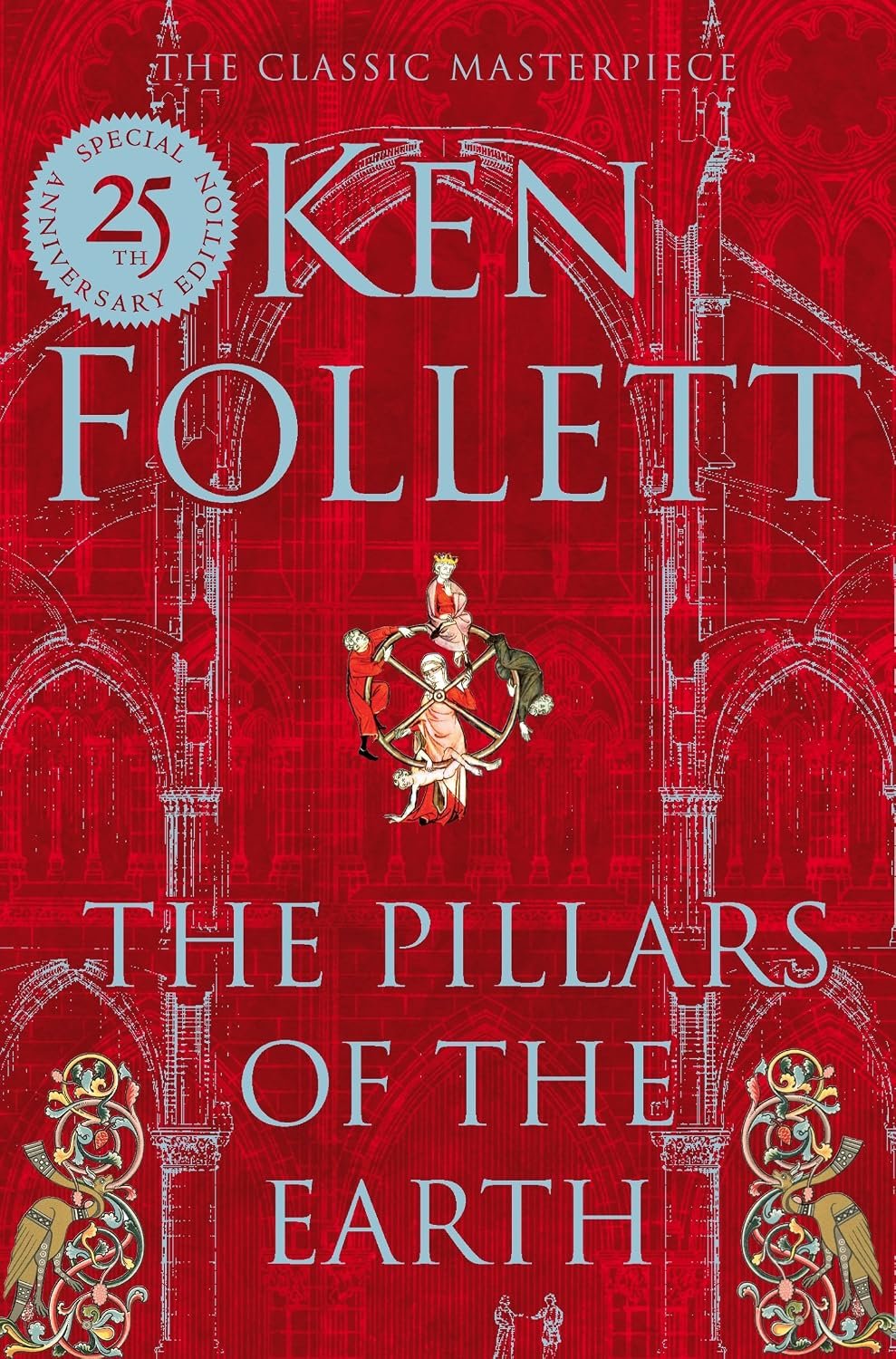
Ken Follett’s historical fiction Pillars of the Earth spans the years 1135-74, and is based in the fictional town of Kingsbridge, following characters’ journeys primarily through the Anarchy, but also ending in the murder of Thomas Becket. This novel is particularly notable as someone fascinated by the Anarchy, providing lavish descriptions and followings of chaos and tension across England, into the lives of normal people.
The plot at first twinges on the sinking of the White Ship and consequent immediate plots and ambition across the country, playing into the dangerous atmosphere following England with an unclear heir to the throne. The mystery of a hanged man’s lover cursing the men who condemn him plays out satisfyingly across the novel, and as the story shapes these events weave through the anarchy, drawing in every character’s role.
Prior Phillip is a kindly, godly man who lives to serve the community and is instantly likeable, along with other Aliena and Tom, both fiery passionate individuals who involve themselves in fights against less good willing forces over Kingsbridge, William Hamleigh, a spiteful and dangerous Earl, being the centre of this. Follett’s exploration and probing into characters create an intense emotional whirl around their lives: there is no one life which you feel disconnected or uninvolved in, since most characters are either so ridiculously likeable or stupidly evil, despite the ‘likeable’ ones having personal faults, they rarely infringe on their morals.
This I found a slight drawback of the novel, as one rarely found themselves conflicted about a character. The exceptions to this were usually characters less central to the plot but more central to the historical context, for instance, King Stephen, who appears wise and understanding at times and at other times does not take enough of an interest to make the expected choices.
Despite not being enough to fully divide opinion, Phillip’s hesitant manner at times, and his need to rule follow creates an uncomfortable frustration in his relationship with Aliena, Tom and Ellen, and it is this complication in the relationships between them which is so endearingly human. As well as this, Ellen’s stubbornness to be harmonious with 12th-century society, her strength as a character and her isolation due to this is fascinating and plays blaringly on prejudices of the period.
Follett draws on multiple aspects of the 12th century which create an immersion of the story, a key interesting element being the focus on architecture. Tom is a passionate architect, and his storyline follows a journey across France and Spain, where he absorbs the emerging Gothic style as well as medieval Islamic geometry. These depictions, particularly of the Abbey of Saint-Denis, which witnesses the pointed arches and flying buttresses so classic of early Gothic architecture, are so beautiful and raw that I found myself more wondrously appreciative of these styles than ever before when witnessing them in person.
A second exquisitely painted contemporary theme of Follett’s was the machinations of political groundwork during the unfolding of the Anarchy. This is gruesomely expressed through the corruption of William of Hamleigh, who manages to brutally rape and pillage his Earldom without backlash owing to the chaos and lack of structure in higher authority. The sense of helplessness and descent into strength of manpower (William’s use of men at arms is often his sole reason for achieving evil) is a direct reflection of the headless and confused state, allowing powerful people to get away with the exploitation of moral and legal boundaries. An unsettling atmosphere of fear and sadistic violence is created and seeps through the bulk of the story remarkably effectively, a product of impressive writing.
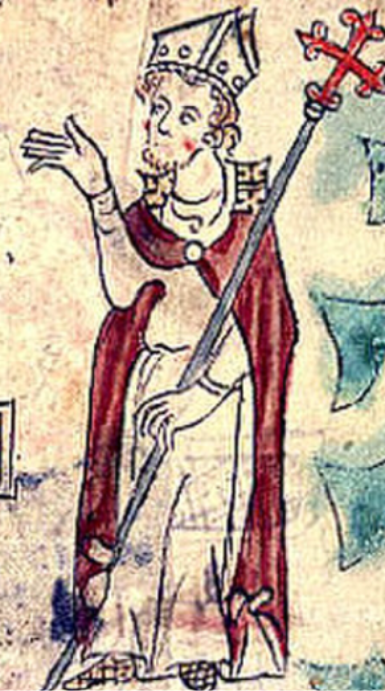
St. Thomas Becket, Archbishop of Canterbury 1162-1170, Peter of Langtoft, Chronicles of England. Public domain via Wikimedia Commons
Rather than a classic focus on royalty, the book slyly introduces fictional machinations around state affairs through the Prior Phillip, who eventually becomes more influential and powerful as a religious political figure. It also serves to impress the inability to separate church and politics at the time, drilled through by the Thomas Becket affair but present as a theme throughout the novel. This novel is such an exulting read because whilst mostly fictional, the very real dangers and political instability of the period are absolutely drilled through, the reader being immersed in them as the plot unfolds.