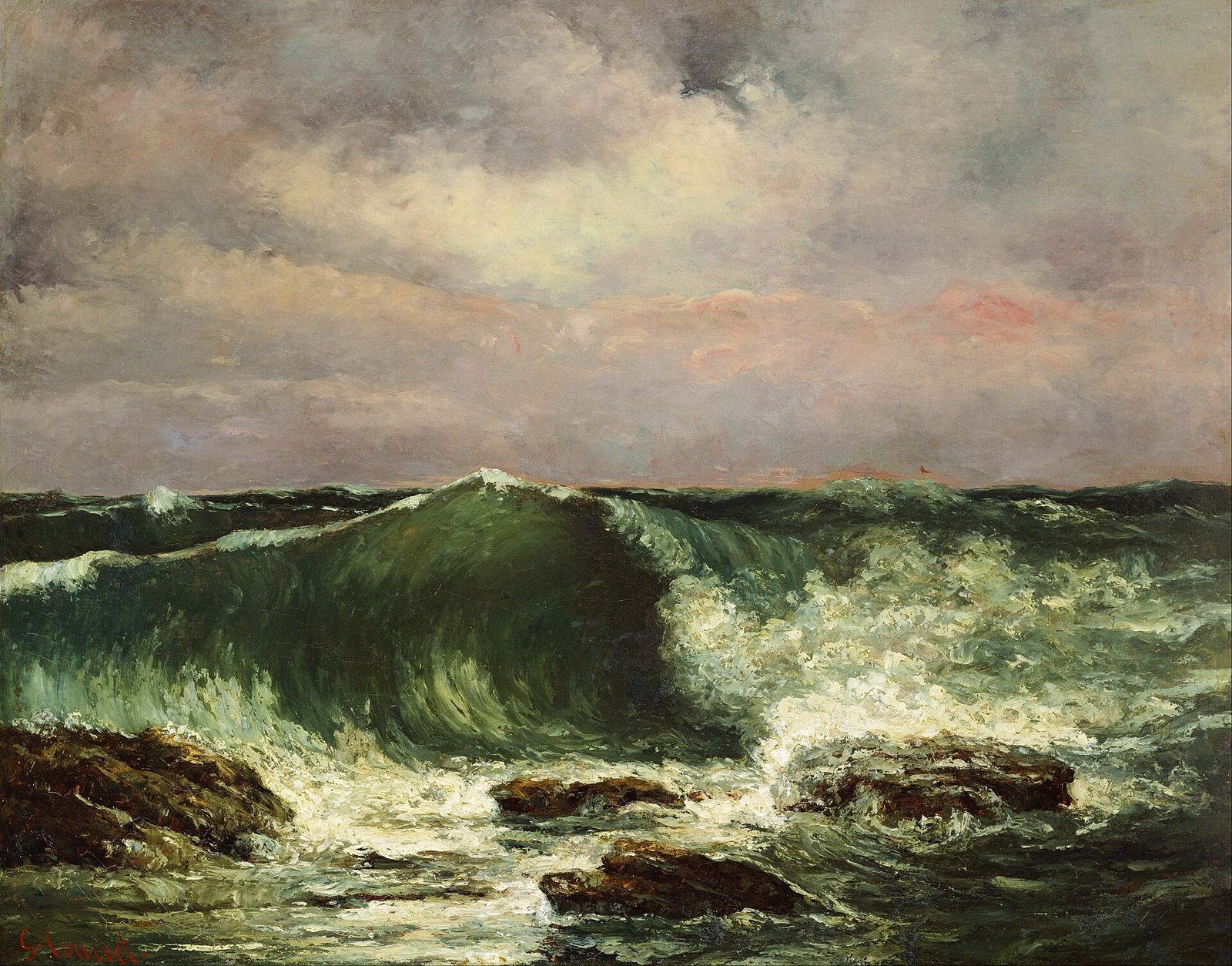
Much of Old English heroic and elegiac poetry is defined by the comitatus relationship, the bond between a lord and his thanes that binds them together with gift-giving and loyalty. Hence, their poems keep returning to the warmth of the mead-hall and the fellowship that comes along, and they frame its absence through wilderness and danger. What creates the lament that leads to the elegiac mode, for instance, is a man condemned to be away from the warmth of his lord’s grace and hall. To illustrate what is lost and lamented, nature proves to be a decisive element with its harsh implications.
As Bede describes Britain as an island “of the ocean,” the natural environment emerges as central to Anglo-Saxon life and identity. In prose texts, rivers, seas, springs, and landscapes appear as sources of sustenance, movement, trade, and communal life. Yet Old English poetry presents these same ecological elements very differently. Seas, frost, storms, ruins, and winter landscapes emerge as hostile, liminal, and transformative forces bound up with exile, spiritual testing, grief, and survival.
These poems are not nature poetry in the Romantic sense. The Anglo-Saxon poets rarely describe landscape for its own sake; the sea, the frost and the ruined wall appear because of their relations to the people in the poems. I aim to follow these relations through the natural elements themselves, taking the sea, the frost and storm, the earth and its ruins, and the creatures of the poems in turn, to see what each of them does for the exile, the warrior and the believer.
The Sea: Exile
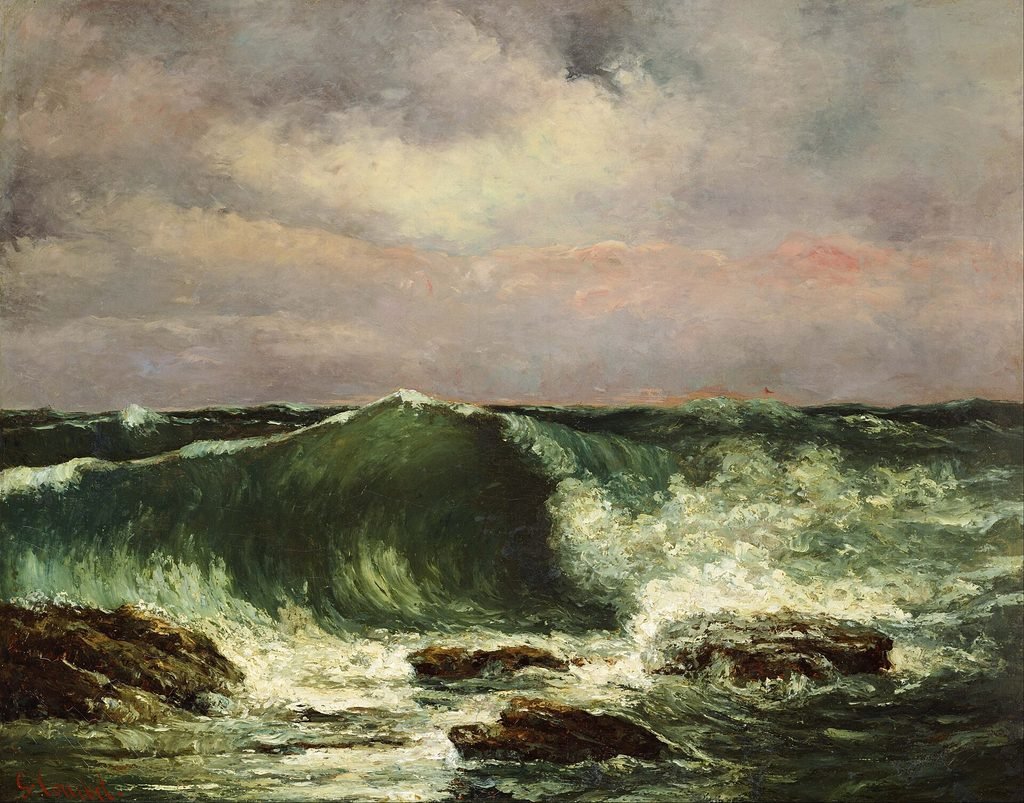
The sea is the element through which the elegies most often stage exile. The speaker of The Seafarer has “often learned that ships are homes of sadness” (Crossley-Holland 53), and the line turns the ship into the inverse of the hall: a dwelling, but one organised around sorrow instead of gift-giving. The poem then replaces the sounds of the hall with those of the sea, since the cry of the gannet and the call of the curlew take the place of “the laughter of men,” and the mewing gull that of “the sweetness of mead” (53). Yet the sea also calls, as the speaker’s mind “roams with the waves over the whale’s domain” (54), which is why the voyage has traditionally been read as a spiritual pilgrimage.
In The Wanderer, the man deprived of his lord “must dip his oars / into icy waters, the lanes of the sea” (50). The oars gain weight when he dreams that he “lays hands and head upon his lord’s knee” (51), and wakes to “the dark waves surging around him” (51). The pattern is not limited to these two poems. In The Wife’s Lament, exile begins when her lord leaves his family “for the tossing waves” (56), while The Husband’s Message turns the sea into the way back, as the lady is told, “Go down to the sea, the home of the gull” (58). The sea therefore both separates and reunites. The heroic poems use the same water differently: the swimming contest with Breca in Beowulf takes place as “the sea heaved, the winter flood” (86), but there it tests a warrior’s strength, whereas in the elegies it becomes the condition of a life without a lord.
Frost, Storm and Sky: Hardship
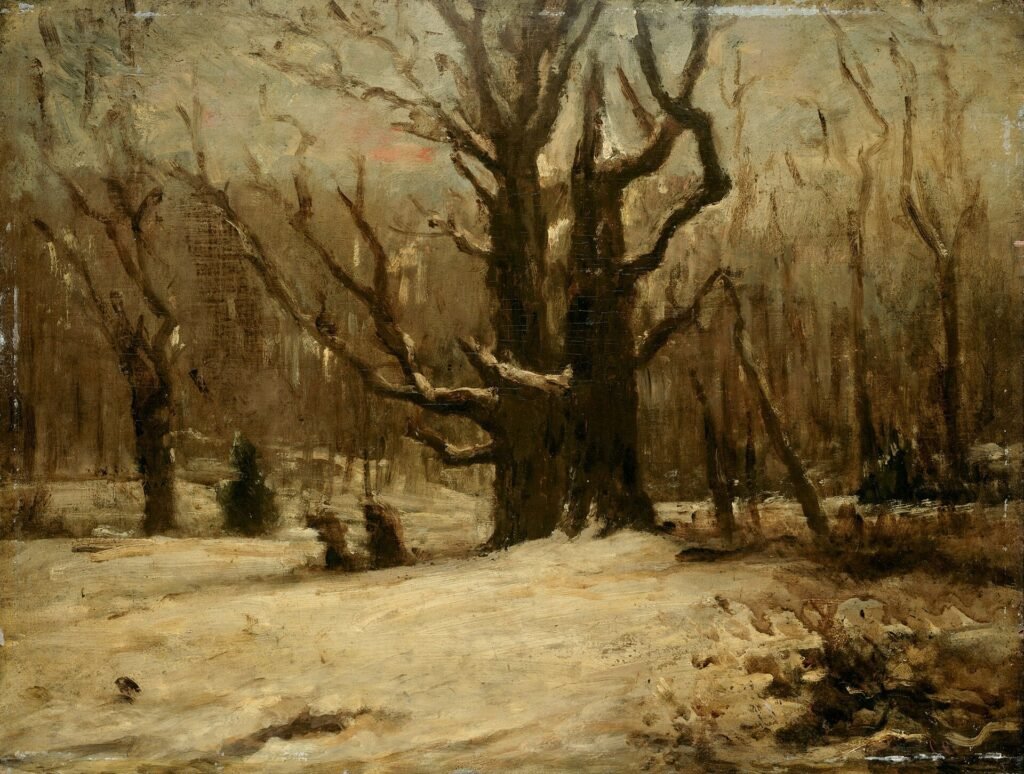
If the sea shows where exile takes place, the weather shows what it costs. The speaker of The Seafarer remembers his feet “fettered in frost” (53) and a night when “frost fettered the earth” (54), and in The Wanderer “sleet and snow fall and fetter the world” (52). The recurrence of the verb across the two poems is telling, since the frost binds the land as exile binds the man. The weather also stands against the hall as its opposite. Waking from his dream of the lord, the wanderer sees “frost and snow falling mingled with hail” (51), so that the cold fills the space the dream has left. Darkness belongs to the same cost, since “the night-shadow grew long” (54) in the seafarer’s winter. The hardship can even be imagined for others: the wife of The Wife’s Lament pictures her husband “sitting under rocky storm-cliffs, chilled / with hoar-frost” (57). Bede’s prose gives the same structure in the council of King Edwin, where a sparrow crosses a banqueting-hall warmed by a fire while “the wintry storms of snow and rain” rage outside (159).
Beowulf places the cold under a larger order. In the Finn episode, “winter sheathed the waves in ice” until spring returned according to “the law of the seasons” (102), and when the sword melts in the monster’s blood, the poet compares it to ice thawing as the Father “breaks the bonds of frost” (114). Frost is therefore a fetter that only God can unwind, a thought that the Christian poems carry further.
Earth and Ruins: The Trace of Lost Glory
Earth is the element in which the elegies bury what the sea and the storm have already taken. The Ruin opens on a wall “wrecked by fate,” with hoar frost clinging to its mortar, and the builders of the city are held in “the earth’s embrace, its fierce grip” (59). The phrase recurs in Beowulf, where the dragon’s treasures look as if they had lain “a thousand winters in the earth’s embrace” (151), so that the earth appears as the keeper of whatever men lose, whether craftsmen or gold. In The Wanderer, the ruin is felt more than described: walls stand “tugged at by winds and hung with hoar-frost” (52), and the lord’s hall survives only as a wall of “wondrous height” against which “Storms crash” (52). Hence the weather that fetters the exile also wears down the hall, and ruin is storm seen in stone instead of in the man.
The earth is also a dwelling for the dispossessed. The woman of The Wife’s Lament is made to live in an “earth-cave” among valleys that are “Gloomy” and strongholds “overgrown with briars” (57), and the speaker of Wulf is held on an island that is “a fen-prison” (59). The same cave appears in The Wanderer, where a warrior “hid one in an earth-cave” (52), and in Beowulf, where the dragon waits in one (137). A single image thus serves as dwelling, grave and lair, since the earth shelters whatever has fallen out of the order of the hall. Even Grendel belongs to this geography, as the “ranger of the moors, the fen and the fastness” (76), an outcast whose home is the wild earth.
Beasts, Birds and Creation: Order and Observation
Creatures complete the picture, and the poems use them in two ways. In the elegies and the heroic poems, they belong to the hostile landscape: the grey wolf devours one of the Wanderer’s fallen comrades (52), the “Birds of battle screech” in the Finnesburh Fragment (8), and the gannet, the “icy-feathered tern” and the eagle of The Seafarer (53) answer the storms in place of human company. The Riddles reverse this perspective by letting nature speak. In the riddle whose solution is a reed, the speaker stood “close by the dyke and dash of waves” (248); the ice riddle announces “water become bone” (249); and the oyster remembers that “The deep sea suckled me” (249). Here, the poets look at the world closely and with wonder, and the sea is a bed instead of a sentence. Nature can also act as a signal: in The Husband’s Message, the lady is to sail when she hears the cuckoo’s song, “that mournful sound in the mountain woods” (58).
The Christian poems place the same elements within a divine order. In Caedmon’s Hymn, God first fashioned heaven “as a roof for the Sons of men” and adorned “this middle-earth” (197), and in The Dream of the Rood, “All creation wept, wailed for the death of the King” (201). The Phoenix describes Paradise as a land where “Neither rain nor snow, frost-breath nor fire-blast, hail-flail nor rime-fall” can do any harm (283), which defines heaven by the absence of the very weather that the exiles endure. Even the whale of the seafarer’s “domain” returns in The Whale, where the monster that sinks seafarers stands for the devil (281, 288).
Conclusion
In these poems, then, nature is rarely scenery. The sea exiles and calls, the frost binds, the earth keeps what men lose and wears down what they build, and the creatures menace, speak or point towards God. The shared vocabulary of the poems, the fettering frost, the earth’s embrace and the earth-cave, suggests that the poets understood hall and wilderness as defining each other. Even the Christian poems do not remove the weather but promise its absence, which measures the elements against hope. The hall remains the centre of all these images, since each element is described through what it takes from the company of lord and thanes. Nature therefore depicts what the hall provides, and the lament of exile is an account of what remains when only that measure is left.
Bibliography
Bede. The Ecclesiastical History of the English People: The Greater Chronicle; Bede’s Letter to Egbert. Oxford University Press, 2008.
Crossley-Holland, Kevin. The Anglo-Saxon World: An Anthology. Oxford University Press, 1984.